Office and campus LAN
A floor of 80 workstations needs a horizontal cable that is predictable to install, easy to test and consistent from the first reel to the last.
What the horizontal run actually demands
The horizontal run between the telecom room and the work area outlet is the most duplicated part of any building network. At 100 m channel length it has to hold its impedance from the patch panel, through the cable, to the outlet and the patch cord at both ends. That is why the cable specification and the patch cord specification have to come from the same manufacturer: the 100 ± 15 ohm impedance and the 9.38 ohm per 100 m conductor resistance limit in this range apply to the whole channel, not only to the box of cable.
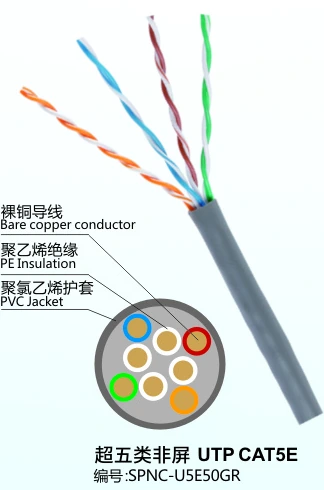
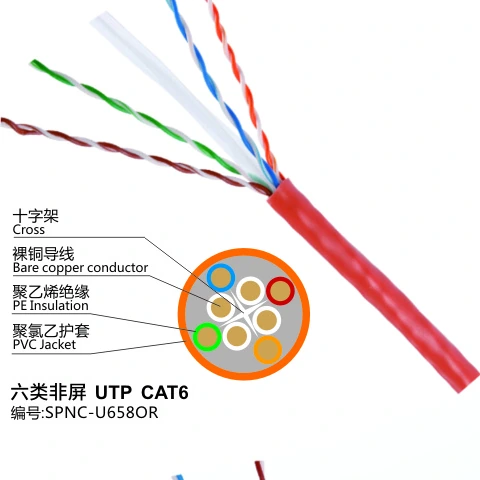
For an office fit-out, CAT6 unshielded cable covers 1000 Mbps to 250 MHz and is the default choice for new builds. CAT5E remains common for refurbishment where the existing containment and outlet hardware are CAT5E rated, and CAT6A is specified where the client expects 10 Gbps to the desk within the life of the lease.
Where shielded cable is worth the extra work
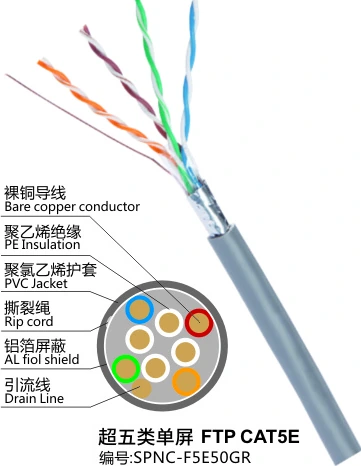
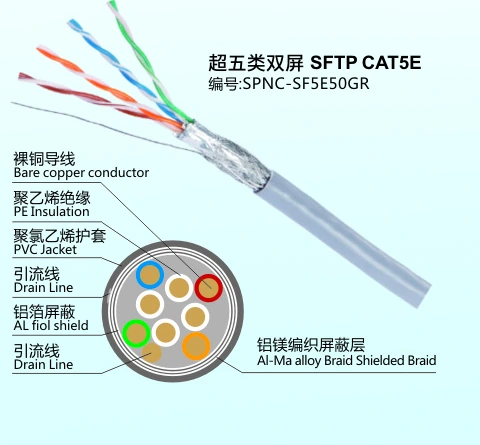
Shielding is a decision about the environment, not about speed. If the cable route runs beside variable-frequency drives, lift machinery, welding equipment or long parallel runs of power cable, a foil or braid shield keeps external noise out of the pair — but only if the shield is bonded at both ends and the installation keeps the screen continuous through the outlets and patch panels.
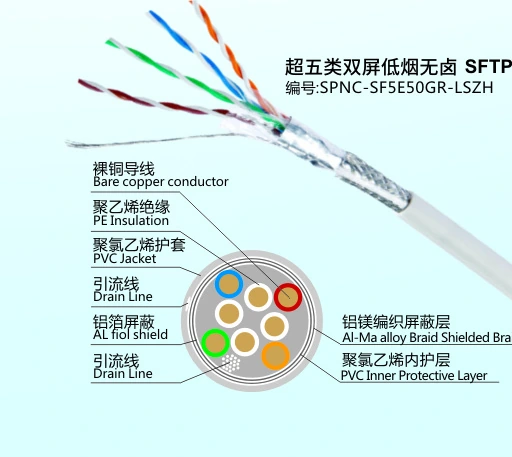
Our FTP and SFTP constructions use aluminium foil with a drain wire, and in the double shielded versions an Al-Mg alloy braid as well. If your installer cannot guarantee bonding and grounding, an unshielded cable in metal containment is usually the more reliable outcome.
Fire performance and the jacket decision
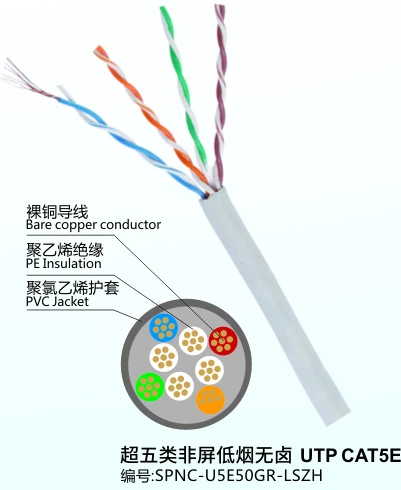
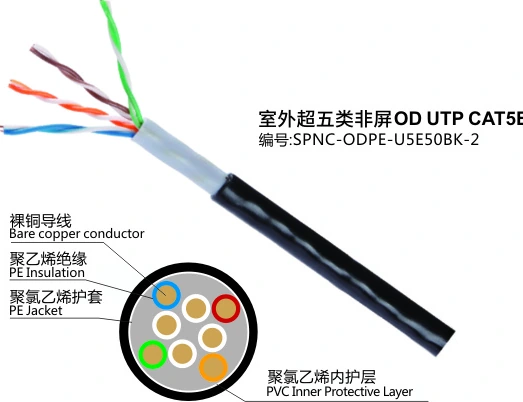
In escape routes, risers and ceiling voids, the jacket material matters more than the category. Low smoke zero halogen versions are available across the range with the -LSZH suffix, so the same electrical construction can be specified for a public building without changing the part-number family or the test regime.
For the office fit-out the practical sequence is: fix the category from the data rate, fix the shield from the cable route, fix the jacket from the building's fire strategy, then confirm colour and printing for the client's handover documentation.
What to send with an enquiry
Give us the category, the shield type, the jacket material, the colour and the total length per floor, plus the outlet and patch-panel hardware you are pairing it with. We confirm the price and the lead time against that list, and we can supply the matching patch cords from the same production so the channel specification stays with one supplier.